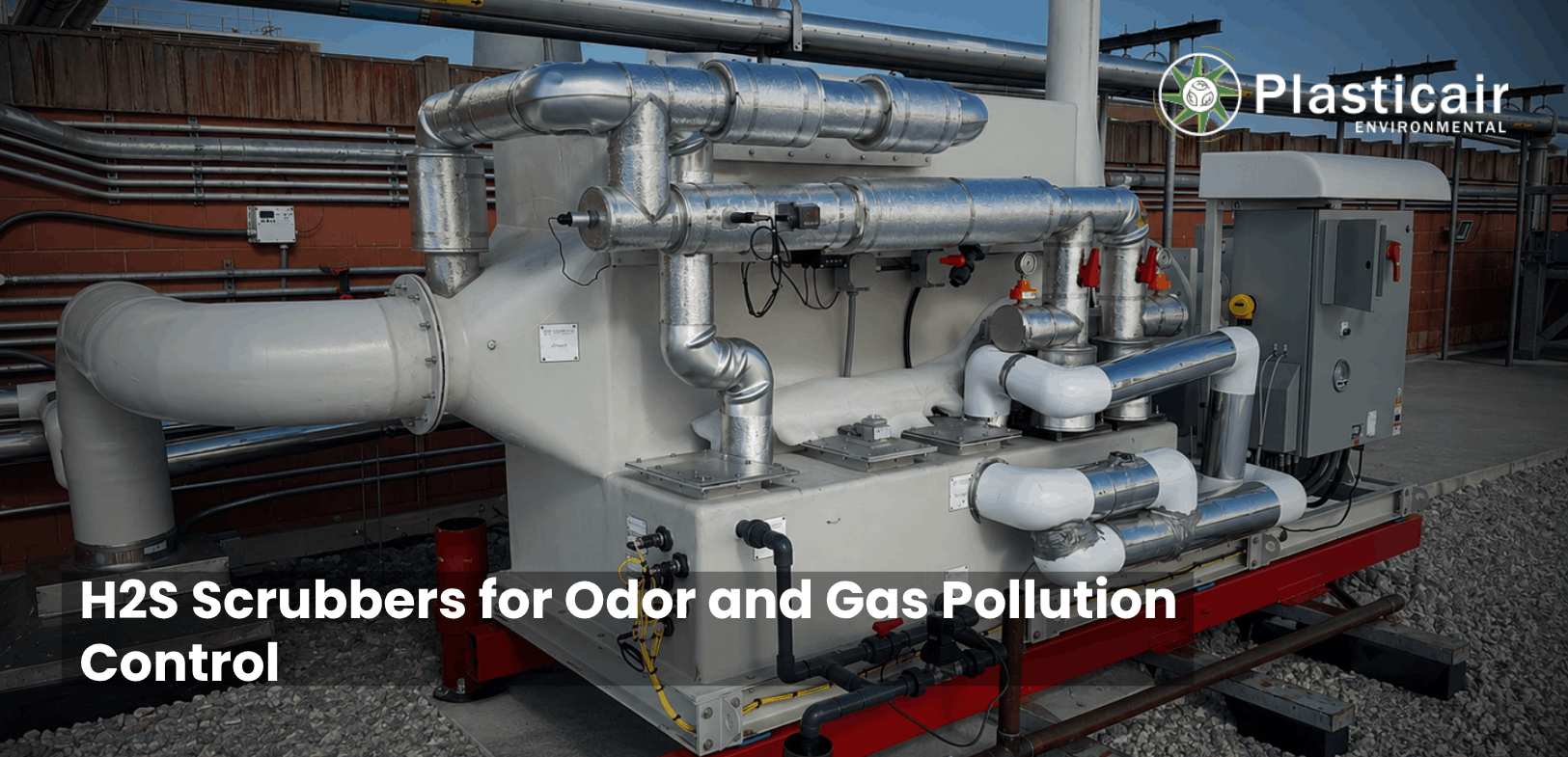
H2S Scrubbers for Odor and Gas Pollution Control
Hydrogen sulfide is one of the most hazardous gases an industrial facility can produce. Known for its rotten egg odor and its ability to corrode metal within months, H2S puts worker safety, equipment life, and environmental compliance at risk all at once. This is where H2S scrubbers come in. Built specifically to capture, neutralize, and remove hydrogen sulfide from exhaust streams, these systems protect people, equipment, and surrounding communities from one of the most dangerous byproducts of oil, gas, and wastewater operations.
In this guide, we will look at what H2S scrubbers are, how they work, the industries that depend on them, and what to consider when choosing the right hydrogen sulfide removal system for your facility.
What Are H2S Scrubbers?
H2S scrubbers are air pollution control devices designed to remove hydrogen sulfide gas from industrial exhaust before it reaches the atmosphere. Using a combination of chemical reagents and specialized packing media, these systems convert toxic H2S into safer, more stable compounds through absorption and neutralization. Because hydrogen sulfide is both flammable and highly corrosive, H2S scrubbers are typically built from Fiberglass Reinforced Plastic (FRP), a material chosen for its resistance to chemical attack and long service life in harsh operating conditions.
Key Features of H2S Scrubbers
-
Scrubber Tower: A vertical or horizontal FRP tower that houses the gas and liquid reaction, built to withstand continuous exposure to corrosive gas.
-
Packing Media: Specialized media that increases surface area for maximum contact between the gas stream and the scrubbing liquid, improving H2S gas treatment efficiency.
-
Chemical Injection System: Delivers the scrubbing reagent, often a caustic or oxidizing solution, at a controlled rate to neutralize hydrogen sulfide as it passes through the tower.
-
Mist Eliminator: Captures liquid droplets carried in the gas stream so only clean, dry air exits the system.
-
Corrosion-Resistant Construction: FRP housings and internals resist the sulfuric and corrosive byproducts formed during the scrubbing reaction, extending equipment life.
How H2S Scrubbers Work
1. Gas Entry: Contaminated exhaust containing hydrogen sulfide enters the scrubber through an inlet duct.
2. Liquid Contact: The gas passes through the packing media, where it contacts a continuously circulated scrubbing liquid.
3. Chemical Neutralization: The scrubbing solution reacts with H2S, converting it into non-hazardous byproducts such as sulfates.
4. Mist Elimination: Any liquid droplets remaining in the treated air are captured before discharge.
5. Clean Gas Discharge: The purified air is released into the atmosphere, meeting emissions and odor control standards.
Industries That Rely on H2S Scrubbers
-
Oil and Gas Refineries: Refineries generate sour gas as a byproduct of processing, making sour gas scrubbers a standard part of emissions control.
-
Wastewater Treatment Plants: Hydrogen sulfide forms naturally during the breakdown of organic material, making wastewater odor control one of the most common applications for H2S scrubbers.
-
Biogas and Landfill Gas Facilities: H2S is a frequent contaminant in biogas streams and must be removed before the gas can be used or released.
-
Pulp and Paper Mills: Chemical pulping processes release hydrogen sulfide, requiring dedicated gas treatment systems.
-
Chemical Manufacturing: Facilities that produce or handle sulfur compounds rely on H2S scrubbers to stay within emissions limits.
Benefits of H2S Scrubbers
Worker Safety
Hydrogen sulfide is toxic even at low concentrations. H2S scrubbers reduce worker exposure and lower the risk of acute health incidents on site.
Equipment Protection
By removing corrosive H2S before it reaches ductwork, fans, and structural components, these systems extend the working life of surrounding equipment.
Regulatory Compliance
H2S scrubbers help facilities stay within air quality and emissions regulations, avoiding fines and reducing the risk of shutdowns.
Odor and Community Impact Control
Because hydrogen sulfide is detectable by smell at extremely low levels, effective gas odor control protects nearby communities from nuisance complaints.
Cost Savings
Preventing corrosion damage and maintaining compliance both reduce long-term maintenance and regulatory costs.
Pairing H2S Scrubbers with FRP Construction
Hydrogen sulfide is one of the most corrosive gases an industrial system will encounter, which is why H2S scrubbers are almost always paired with FRP fans and fiberglass ductwork. FRP construction resists the sulfuric byproducts formed during the scrubbing process, keeping the entire system, not just the scrubber tower, protected from corrosion over time.
Choosing the Right H2S Scrubber
A few factors determine which H2S scrubber design is right for a facility:
-
Gas Concentration and Flow Rate: Higher H2S concentrations may require a taller tower or additional packing media for full contact time.
-
Packing Media Type: Different media offer different tradeoffs between efficiency and pressure drop.
-
Corrosion Resistance Requirements: Facilities handling especially aggressive gas streams may need thicker FRP construction or specialized resin systems.
-
Customization Needs: Flow rate, footprint, and installation space all affect whether a vertical or horizontal packed bed design is the better fit, a configuration explored further in our guide to packed bed scrubbers.
Hydrogen sulfide is not a gas any facility can afford to manage carelessly. H2S scrubbers offer a proven, reliable way to protect workers, extend equipment life, and stay ahead of environmental regulations, all while controlling one of the most recognizable odors in industrial operations. Whether your facility is in oil and gas, wastewater treatment, or chemical processing, the right H2S scrubber makes hydrogen sulfide removal a manageable part of daily operations rather than a constant risk.
Plasticair Environmental designs corrosion-resistant scrubbing systems built for the toughest gas streams. Visit our Products page to explore our full range.
Frequently Asked Questions (FAQs)
An H2S scrubber is an air pollution control device that removes hydrogen sulfide gas from industrial exhaust using chemical reagents and specialized packing media, converting the toxic gas into safer, stable byproducts before clean air is released.
The gas stream passes through packing media where it contacts a scrubbing liquid. A chemical reaction neutralizes the hydrogen sulfide, and any remaining liquid droplets are captured by a mist eliminator before the treated air exits the system.
Oil and gas refineries, wastewater treatment plants, biogas and landfill gas facilities, pulp and paper mills, and chemical manufacturing plants are among the heaviest users of H2S scrubbers.
Most H2S scrubbers are built from Fiberglass Reinforced Plastic (FRP) due to its resistance to the corrosive, sulfuric byproducts formed during the scrubbing process.
Yes. Scrubber height, packing media type, and vertical versus horizontal configuration can all be adjusted to match a facility's specific gas flow rate and space constraints.
Yes. Because hydrogen sulfide is detectable by smell at very low concentrations, removing it also resolves most odor complaints tied to a facility's operations, not just the safety and compliance concerns.